

















Health & Fitness
Weight 172.4 lbs
Resting HR 56 bpm
Cholesterol 182 mg/dL
- Heart Rate
- Steps
- Cholesterol
- Weight
- Blood Pressure

WHAT YOU CAN TRACK
Logkit works with almost every unit of measurement, allowing you to track almost anything you can imagine.

Today is Tue, Aug 4 with 4 logs and 8 logs this week for 2 items
Save up on subscriptions & clean up your home screen with one app for simple tracking, or complement your favorite trackers by viewing their inputted data into Apple Health data in LogKit.
Use it as a health, fitness, productivity, hobby, water, sleep, or even caffeine tracker! Anything that can be tracked numerically can be tracked with LogKit.
From days and weeks to years and even decades, track the trends and arcs of your data with a flexible, intuitive interface.
View your data with multiple chart types and a table.
See your data from days to years and beyond.
Your data is stored on your device and never leaves it.
Take your data with you with exports.
Sync your Apple Health and Screen Time data to see otherwise isolated, messy data together in one simple interface.
Easily add, delete, edit, and export your records through the app.
Keep your data close to the surface with different widgets on your home or lock screen. Log with just a tap.

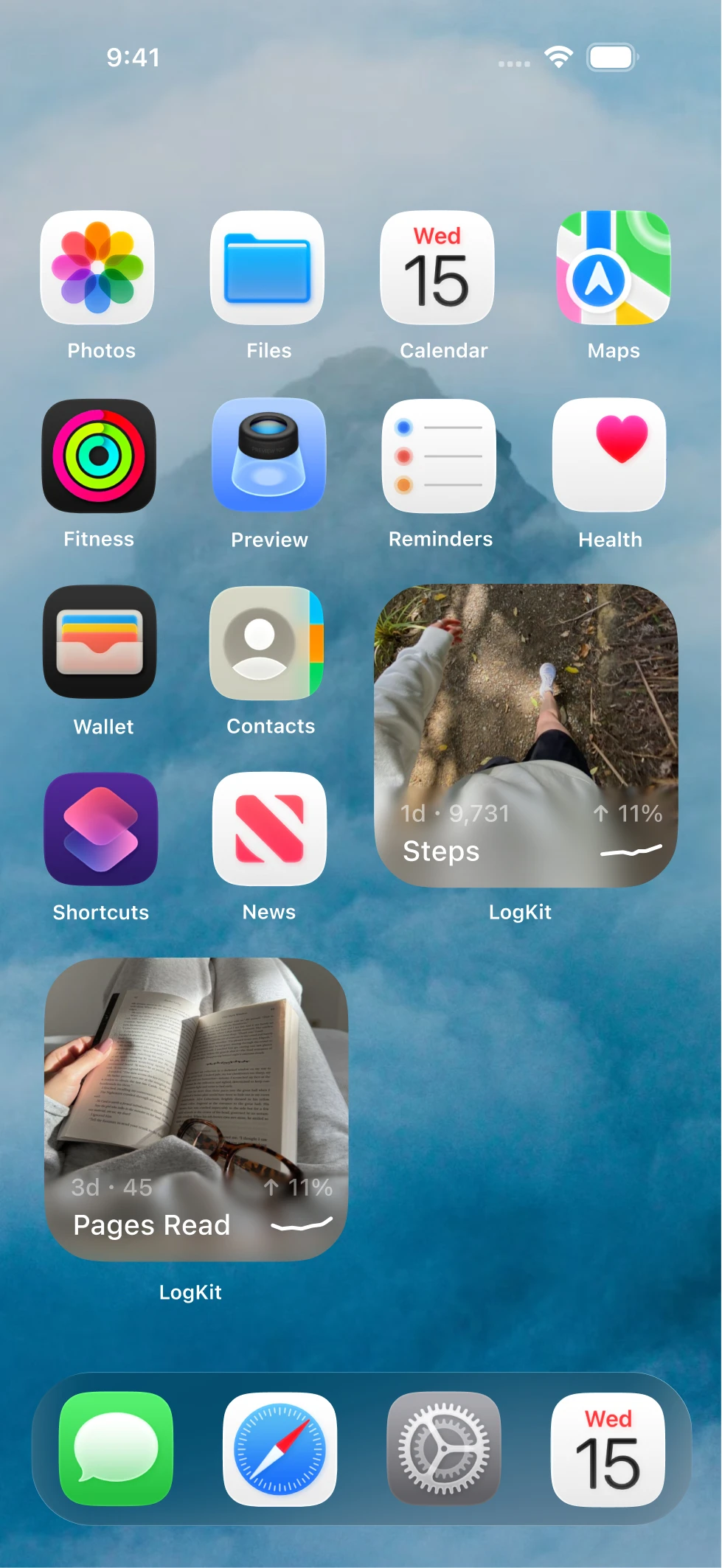
Customize your collections with any image and choose from different fonts, themes, and even app icons to make LogKit yours.
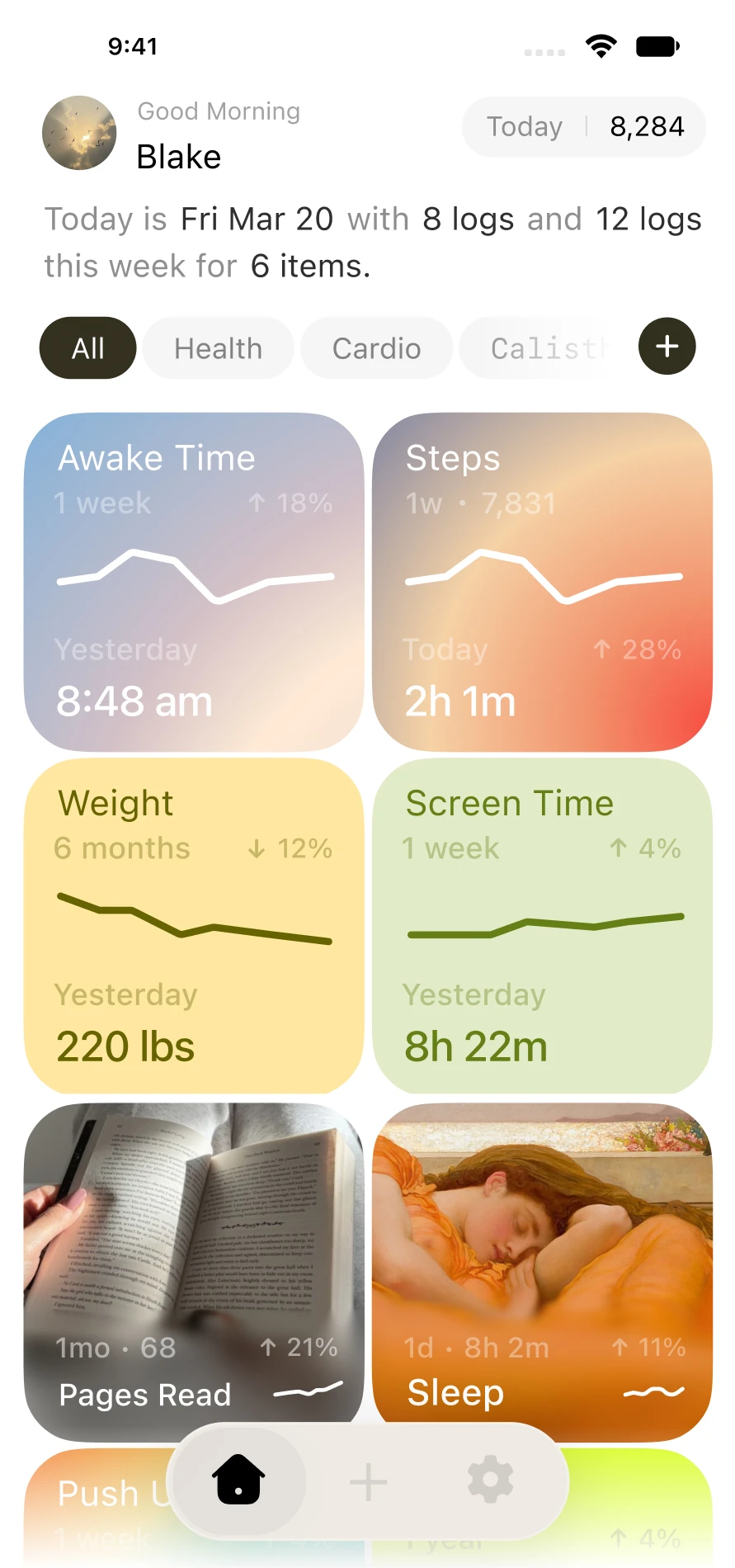
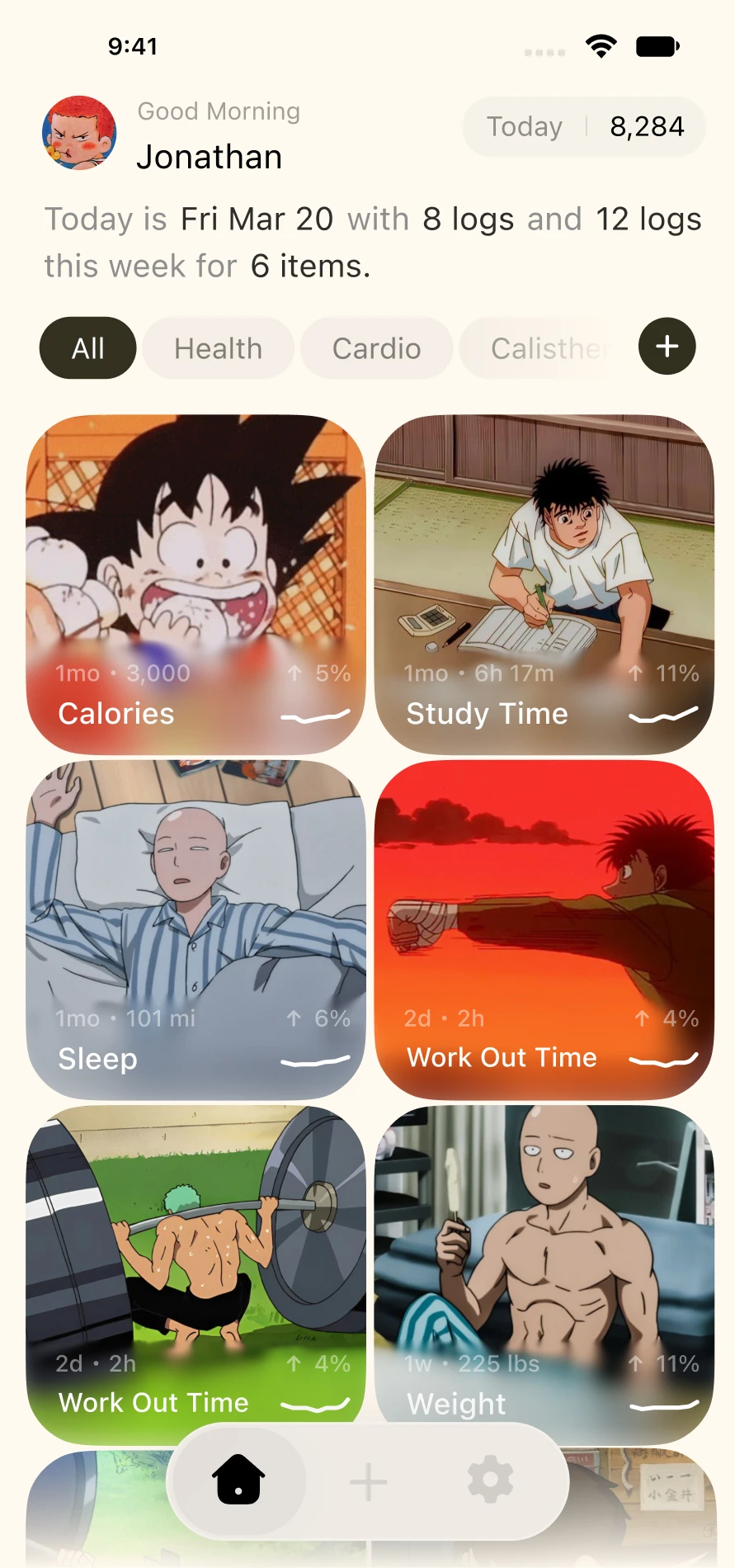
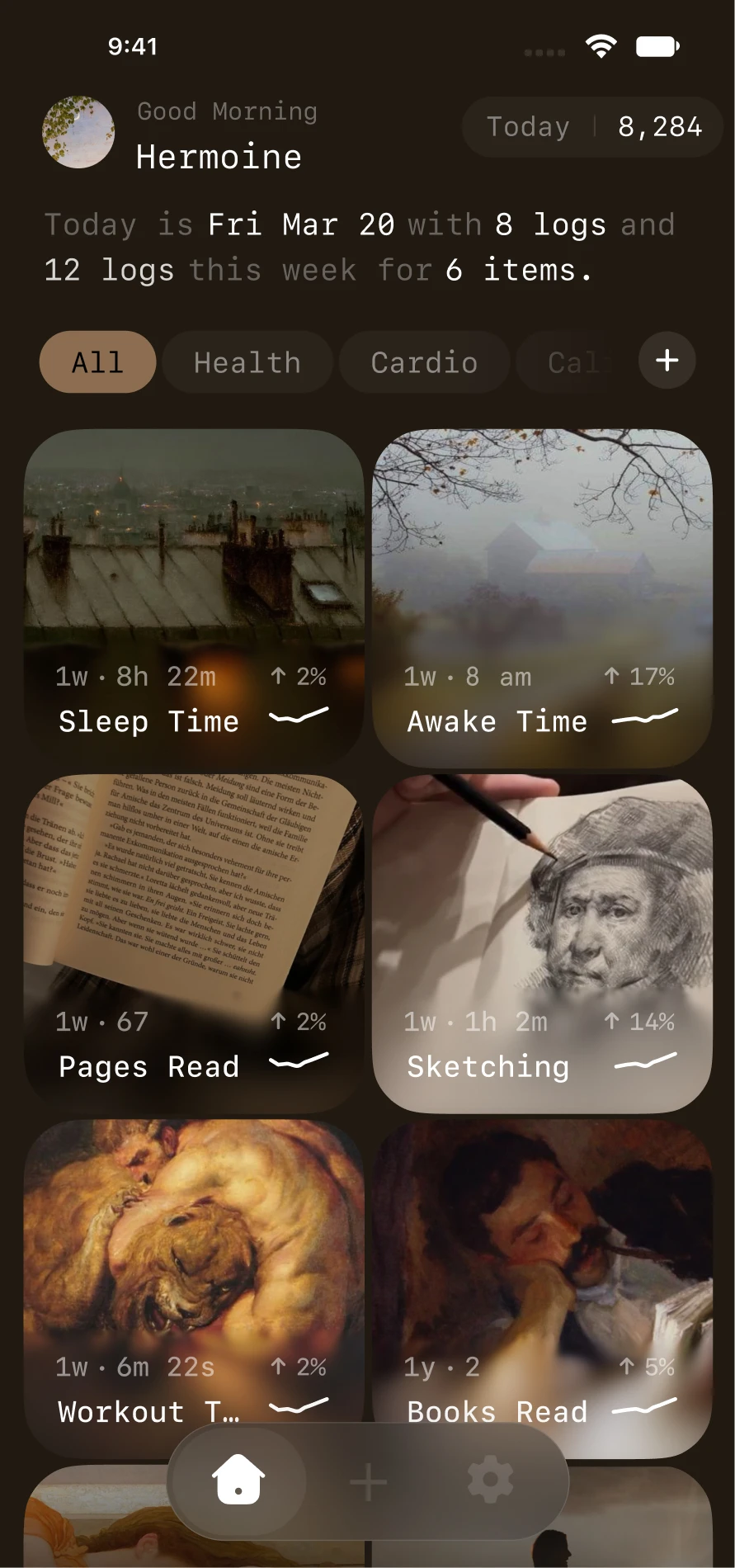
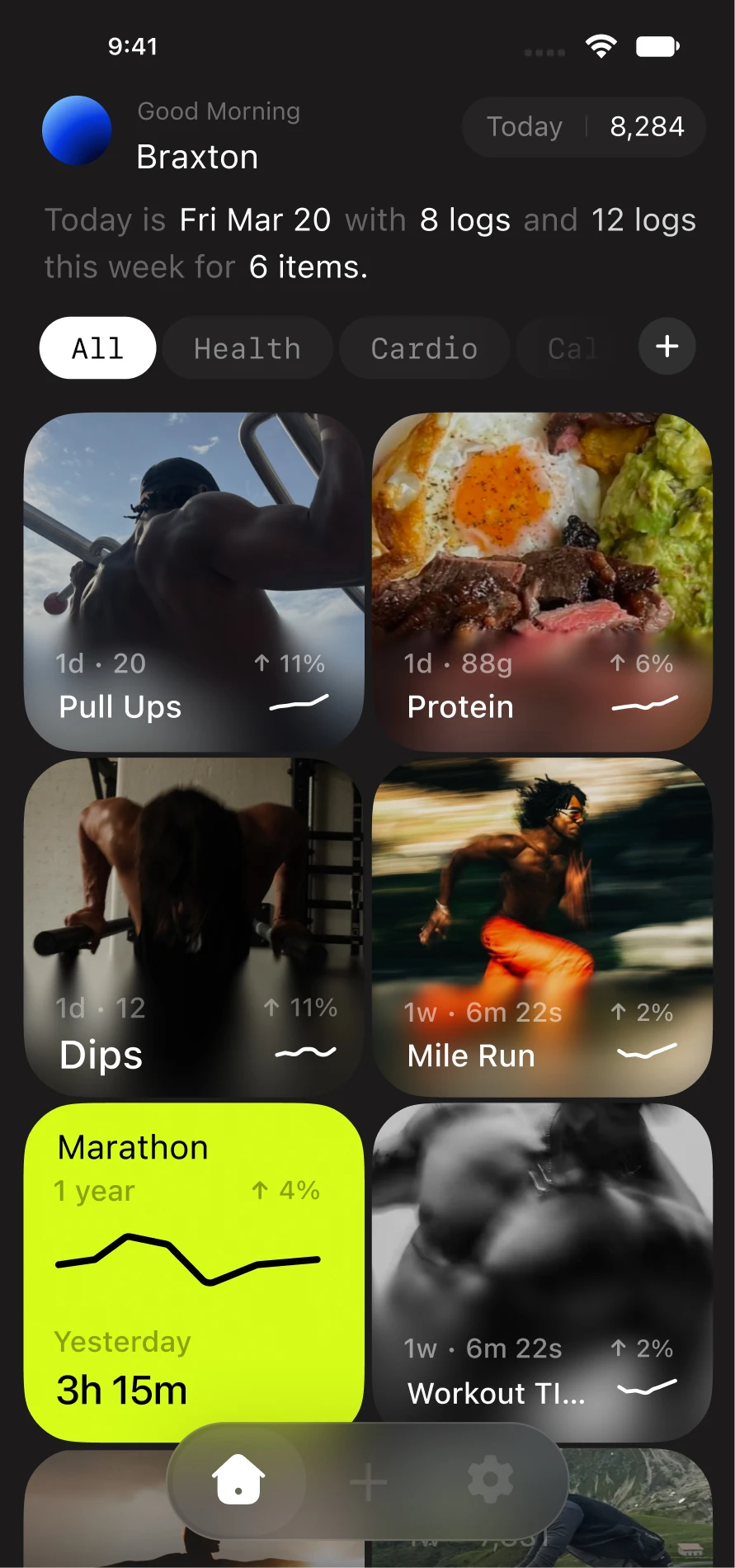
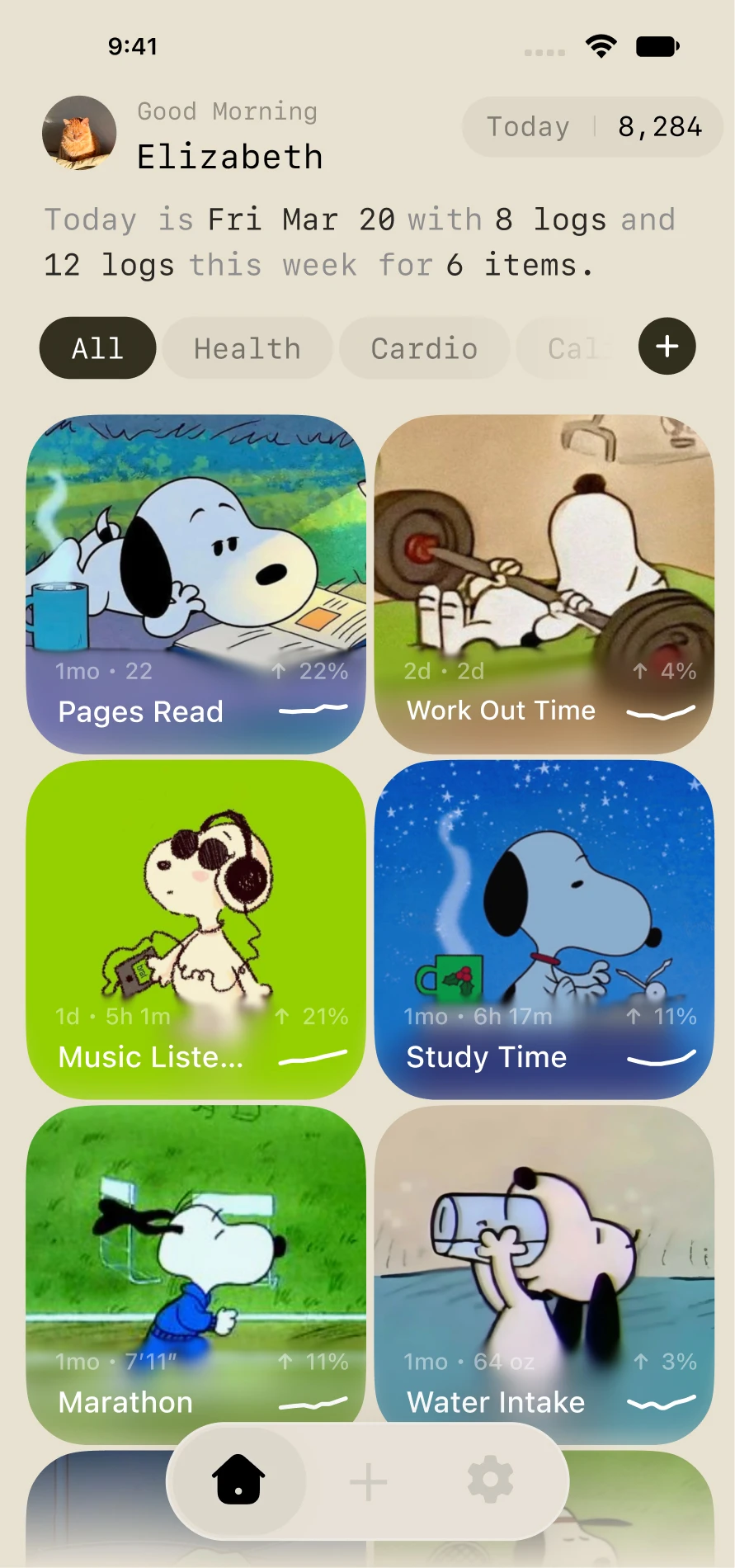
Tracking allows us to be more aware of the patterns of our habitual routines and progress in our day-to-day lives, so that we may live with better clarity and intention.
Start logging to see those patterns.
See the Research
Study of 552 adults during COVID-19 found that the 59.9% that used health apps were 1.91× more likely to meet activity guidelines than non-users. And newer users were 1.66× more likely than non-users.
The use of mobile apps and fitness trackers to promote healthy behaviors during COVID-19A study of 220 obese women showed an average weight loss of 10.4% after 6 months. Those who tracked consistently (3+ days/week) were significantly less likely to regain the weight in the long term.
Dietary Self-Monitoring and Long-Term Success with Weight ManagementAcross 26 studies totaling 2,767 participants, those who used pedometers walked 2,491 more steps per day than non-trackers, lowering their BMI by 0.38 kg/m² and systolic blood pressure by 3.8 mmHg.
Step Counting: A Review of Measurement Considerations and Health-Related Applications